Tools
The Weekly PPC Management Routine (What to Actually Do Each Week)
Managing ad accounts well is mostly a boring, repeatable rhythm — not constant tinkering. The daily, weekly, and monthly checklist I run, and the things to deliberately not do.

PPC & Creative Strategist
Most underperforming ad accounts aren't broken by bad strategy. They're broken by either neglect (nobody looks for weeks) or its opposite (someone fiddles daily and never lets anything stabilize). Good PPC management is a rhythm: small, consistent checks that catch problems early and let winners run.
Here's the actual routine — daily, weekly, monthly — that I run on accounts, and just as important, the tempting things you should *not* do.
TL;DR
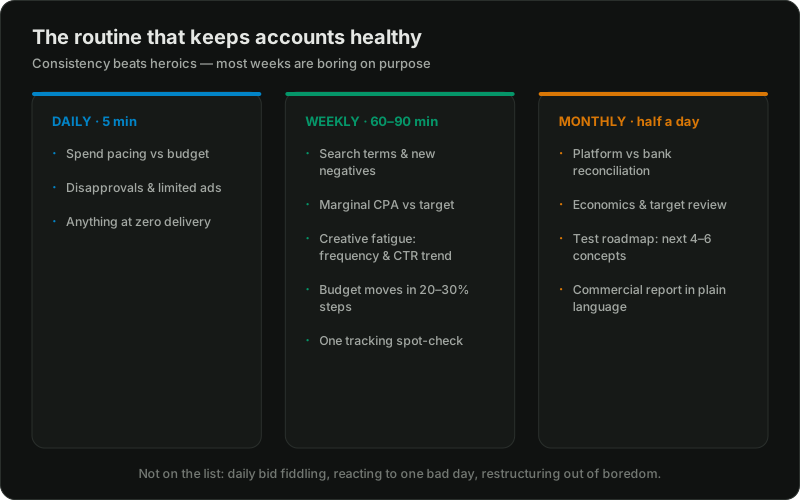
Daily — five minutes, eyes only
The daily check exists to catch fires, not to optimize. Three things:
1. Spend pacing. Is spend roughly where it should be? A campaign burning 3x its budget or stuck at zero is the kind of problem that costs real money by day three.
2. Disapprovals and limited status. A rejected ad or "limited by policy" flag silently throttles delivery. Healthcare, finance, and wellness accounts especially need this daily glance.
3. Zero-delivery anomalies. An ad set that stopped spending overnight usually means a broken tracking event, an exhausted audience, or a billing issue.
That's it. Resist the urge to change bids because yesterday was soft. One day is noise.
Weekly — the real working block (60–90 min)
This is where the actual management happens.
Search terms and negatives (Google). Read what people actually searched, add negatives for the junk, and note new winning terms. On broad match especially, this is the difference between an account that improves and one that leaks. The method is in negative keywords mastery.
Marginal CPA vs target. Not blended averages — how is the *most recent* spend performing against what a conversion can afford to cost? If the last budget increase pushed cost per conversion past your ceiling, that's the signal to hold, not scale. The framework is in how much to spend on ads.
Creative fatigue check. Sort ads by spend and look at frequency and CTR trends. Rising frequency with falling CTR on your top spender is the most common cause of slow decline — the full diagnosis is in why Facebook ads stop working.
Budget moves in steps. Adjust in 20–30% increments, not doublings, so the platform's learning survives the change. Scale what clears the target; trim what doesn't.
One tracking spot-check. Fire a test conversion or compare a day's platform conversions against orders. Tracking breaks silently, and every decision downstream depends on it.
Monthly — step back and think (half a day)
Reconcile platform vs bank. Compare a month of platform-reported revenue against actual attributable revenue from your store or CRM. A stable gap is fine; a widening one means something broke. See why the platform numbers don't match.
Review the economics. Margins, close rates, and targets drift as prices and products change. A tROAS target set six months ago may no longer reflect reality. Re-derive it.
Plan the test roadmap. Decide the next 4–6 creative or offer tests with a reason for each. Accounts without a test pipeline coast on old winners until they fatigue.
Write the report in plain language. Spend, business results (qualified leads or margin, not clicks), what changed and why, what's next. If you manage your own account, writing this for yourself forces honest thinking.
What to deliberately NOT do
The point of the rhythm
The routine keeps you proactive instead of reactive. Problems get caught while they're small, winners get room to run, and decisions rest on trend data rather than yesterday's mood. Boring is the goal — a calm account outperforms a frantically managed one almost every time.
Want this run for you — properly and consistently?
Related reading:

Written by
Vince Servidad
PPC & Creative Strategist
I manage Google Ads and Meta Ads for ecommerce, healthcare, SaaS, events and nonprofits, with creative strategy, Shopify development and conversion tracking.