Tools
What the First 90 Days With a Performance Marketer Should Look Like
No 'results in week one' promises — a realistic timeline of what competent PPC management does in months one through three, what you should see at each checkpoint, and the warning signs it's going wrong.

PPC & Creative Strategist
The most common question I get after "how much?" is "how fast?" — and the industry has trained business owners to expect either magic ("2x in 30 days!") or vagueness ("results take time").
Both are evasions. Competent PPC work follows a knowable sequence with checkpoints you can hold anyone to — including me. Here's what the first 90 days should look like, whoever you hire, and the warning signs that they're going wrong.
TL;DR
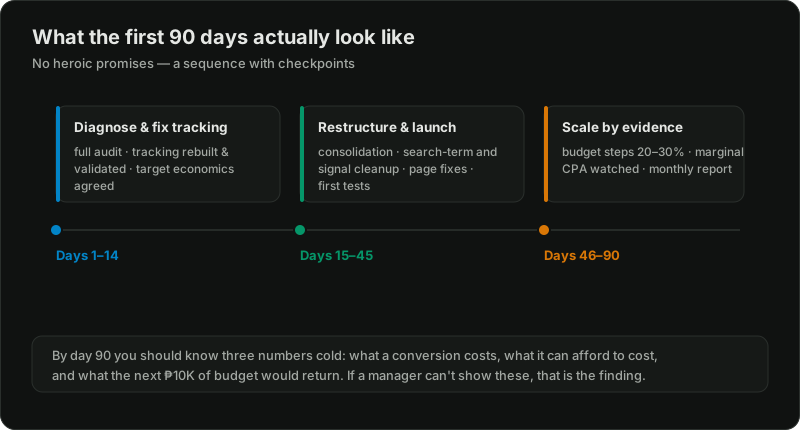
Days 1–14: Diagnose before touching anything
The first thing a competent operator does in a new account is nothing — no budget moves, no restructures on day two. Instead:
What you should see by day 14: a written diagnosis — what's broken, what it costs you, the fix order — and tracking you can trust. Possibly zero performance improvement yet. That's correct.
Days 15–45: Restructure, launch, and hold your nerve
Now the account changes shape: consolidation (fewer, better-fed campaigns), search-term and audience cleanup, landing-page fixes for the biggest post-click leaks, and the first proper test round of creative or copy.
Two honest warnings for this phase:
What you should see by day 45: a cleaner account you could explain in one sentence, at least one completed test with a decision attached ("this angle wins, this one's dead"), and cost-per-conversion trending the right way on the fixed measurement.
Days 46–90: Scale by evidence, not enthusiasm
With clean data and a stabilized structure, budget decisions become the job: raises in 20–30% steps, judged on marginal (not blended) cost per conversion, capacity checked before each step — the discipline from how much to spend on ads. Losing tests get killed without ceremony; winning ones get fed.
Reporting settles into a rhythm — and the report is the tell of the whole engagement. It should read like business: spend, what it produced (in qualified leads or margin, not clicks), what was changed and why, what happens next. If your monthly report is a screenshot of CTRs, you bought dashboard narration, not management.
What you should know by day 90 — cold: what a conversion costs you, what it can afford to cost, and what the next ₱10K of budget would likely return. If neither you nor your operator can answer these after a quarter, that is the finding.
The warning signs, collected
The interview questions that surface most of this before signing are in what to ask before hiring a PPC manager.
This is my actual operating sequence
Related reading:

Written by
Vince Servidad
PPC & Creative Strategist
I manage Google Ads and Meta Ads for ecommerce, healthcare, SaaS, events and nonprofits, with creative strategy, Shopify development and conversion tracking.