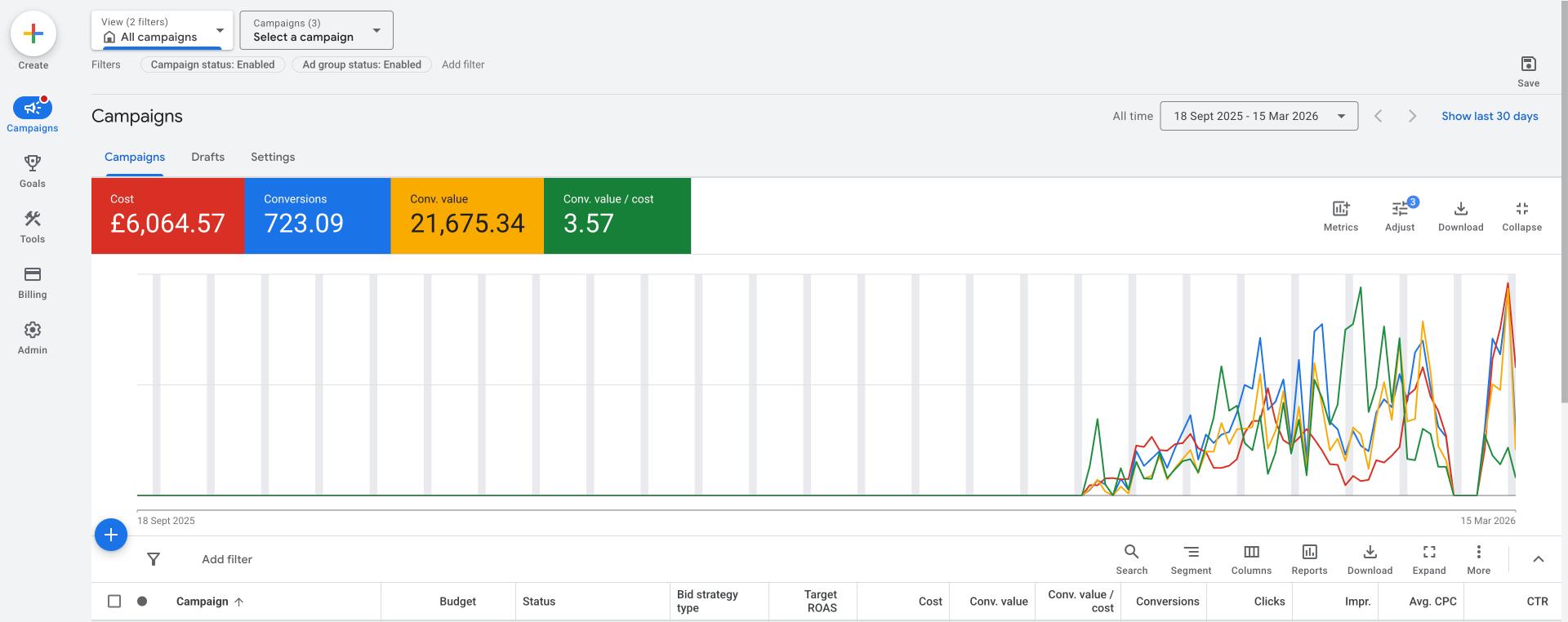
Performance snapshot · Ecommerce
Six-month Google Ads account: 3.57x conversion value/cost
- Conversion value / cost
- 3.57x
- Conversion value
- £21,675.34
Google Ads account view · September 18, 2025 to March 15, 2026 · GBP.
View source and context
Vince ServidadPPC & Creative Strategist
Send your site and what is not working. I will suggest what to investigate first.
Google Ads specialist · ecommerce, healthcare, SaaS, events and nonprofits
Google Ads can spend just as easily on searches that were never going to buy. I run Search, Shopping, Performance Max, Demand Gen and YouTube, plus the feeds, bidding and tracking behind them, against what a sale or qualified lead is worth rather than the cheapest conversion the account can report.
Management starts at US$1,700/month per channel. A defined project is quoted at a fixed price before work starts. The initial project review is free.
Start Free ReviewRemote Google Ads work for international ecommerce and lead-generation businesses. Focused projects or ongoing management, depending on the constraint.
What has to be true before you scale
Performance evidence
Anonymized Google Ads account snapshots, each one shown with its source and reporting period.
Performance snapshot · Ecommerce
Google Ads account view · September 18, 2025 to March 15, 2026 · GBP.
View source and context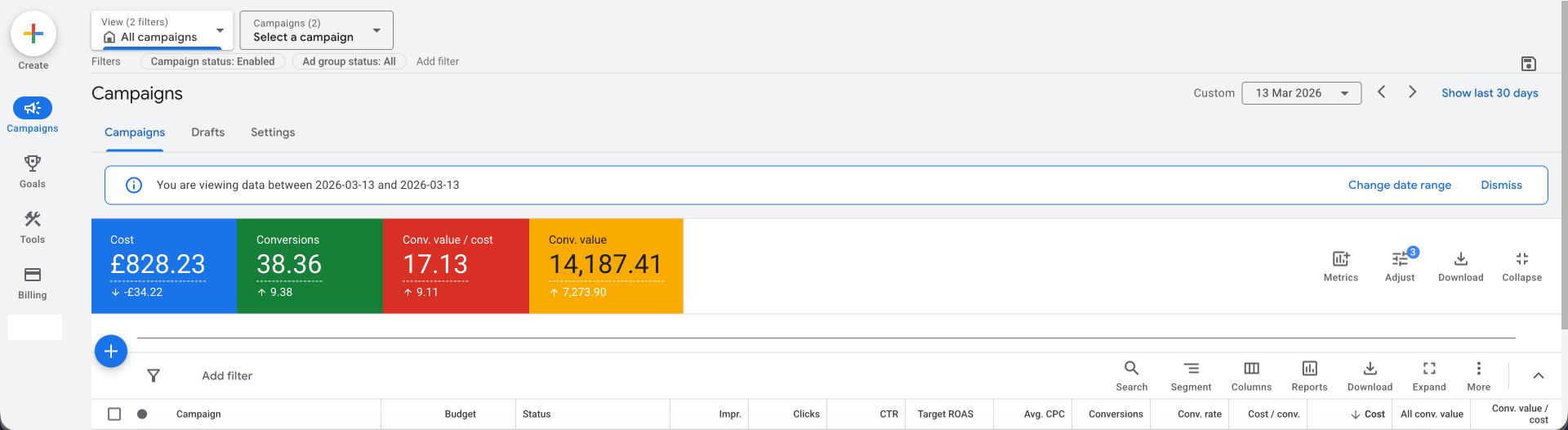
Performance snapshot · Charity
Paid Google Ads · March 13, 2026 · GBP.
View source and contextKeywords, match types, negatives, locations, ads, and landing pages are organized around the searches most likely to become revenue.
Titles, product types, identifiers, images, attributes, errors, and segmentation are improved around the queries worth buying.
Feeds, asset groups, search themes, audience inputs, exclusions, brand controls, and conversion actions are reviewed against real outcomes.
CPA, CPL, ROAS, margin, lead quality, and conversion volume guide when to hold, cut, reallocate, or scale spend.
Primary conversion actions, values, enhanced conversions, calls, forms, purchases and reporting gaps are checked before relying on the numbers.
Updates focus on spend, business results, search insights, tests, budget moves, and what should happen next.
Search, Shopping, Performance Max, Demand Gen, YouTube, Brand campaigns, Non-brand acquisition, High-intent keyword campaigns
Merchant Center, Product feed optimization
GA4, Google Tag Manager, Conversion tracking, Tracking audits
Keyword research, Search intent, Offer positioning, Budget allocation, Bidding strategy, Campaign scaling
Management starts at US$1,700/month per channel, or US$3,400 for Google Ads and Meta Ads together. An additional 3% applies only to spend above the channel threshold agreed in your proposal, typically US$24,000/month. Spend is not pooled across channels. Ad spend and development are separate. You approve the scope, threshold and fees before work begins. The initial project review is free.
Google Ads is strongest when people already search for what you sell. The right mix depends on search demand, margins, conversion value, competition, and whether the goal is ecommerce sales or qualified leads.
Yes. Each campaign type gets a clear job, budget, conversion goal, exclusions, and measurement rules so automation supports the strategy instead of replacing it.
I review conversion actions, asset groups, feeds, search themes, brand controls, exclusions, overlap, and the real sales or lead quality behind the reported results.
Yes. Conversion actions, values, enhanced conversions, calls, forms, purchases, feed titles, identifiers, attributes, errors, and query relevance can all be part of the work when they affect performance.
Ecommerce, healthcare and clinics, sexual health and fertility, digital products and SaaS, events and ticket sales, and charity, nonprofit and fundraising accounts. The categories differ in what a sale is worth, what the platform will approve and how long the buying window stays open. The order I work in does not change.
Often, yes. Healthcare, sexual health and fertility all sit under policies that reject wording a clinician would think is fine, and they limit what data can be sent back to the platform. That has to be designed in from the start rather than appealed afterwards. I will tell you before we start if I think a category cannot be advertised the way you want it to be.
Yes. I work remotely with ecommerce and lead-generation businesses in the US, UK, Australia, New Zealand, Canada, the Philippines, and other international markets.
Measurement, landing-page relevance, feed quality, and paid-social demand can all change what the account should do next.
Send your site, the account context and the result you need. I’ll tell you what I would inspect first and whether the problem is inside the account.