Legal
Legal Intake: Where Law Firm Ad Spend Actually Leaks
A firm can buy the most expensive clicks in search and lose most of them in the twenty minutes after the phone rings. Intake is not an admin function — it's the last mile of your media buy.

PPC & Creative Strategist
A firm pays a large sum for a click. The click produces a call. The call goes to a receptionist juggling three other things, who takes a name and number and says someone will get back to them.
Nobody calls back until the next afternoon. By then the prospect has spoken to two other firms and retained one of them.
That entire loss happened after the ad worked perfectly. And it's the single most common reason legal PPC underperforms — not bidding, not keywords, not creative.
TL;DR
Why legal is worse than most categories
The decision is urgent and emotional. Someone who has just been injured, arrested, served, or blindsided by a family matter is not going to wait politely. They are calling down a list.
They are explicitly comparison shopping. Most prospective clients contact several firms. You are not competing on who has the best website; you're competing on who picked up.
The enquiry is disproportionately expensive. In a category where clicks can cost more than a nice dinner, dropping the resulting call is a uniquely costly form of waste.
Demand doesn't respect office hours. Arrests, accidents, and crises happen at night and on weekends. A firm advertising 24/7 and answering 9–5 is systematically buying its most urgent enquiries and discarding them.
The four leaks, in order of size
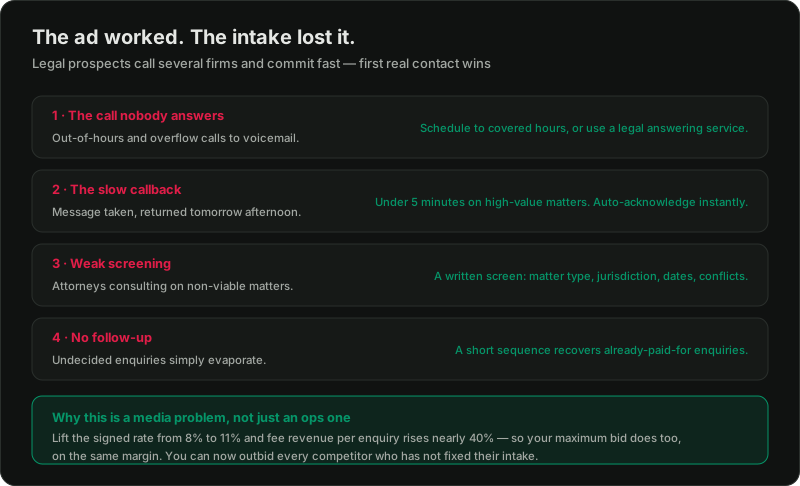
1. The call nobody answers
The biggest one, and the easiest to quantify. Pull your call records: how many ad-driven calls went unanswered or to voicemail, and at what hours?
Fixes, cheapest first:
2. The slow callback
Someone leaves a message. Someone else calls back tomorrow. The matter is gone.
Target under five minutes for the first substantive contact on high-value matters. If that's impossible, an immediate automated acknowledgement — "we've received this, an attorney will call you within the hour" — at least stops them dialling the next firm on the list for a while.
Same dynamic as speed to lead in trades, with more money per enquiry riding on it.
3. Weak screening
The opposite failure: everything gets through, attorneys spend hours on consultations for matters outside the practice area, out of jurisdiction, conflicted, or non-viable.
A short structured screen — matter type, jurisdiction, key dates, whether they already have counsel, conflict check — protects the most expensive resource in the firm. Written down, so it doesn't depend on who answered.
The screen is also where your conversion data comes from. Whoever takes the call should record the outcome, because that's what makes signed-case feedback possible at all.
4. No follow-up sequence
Not everyone signs on the first call. Some are gathering information, waiting on a decision, or dealing with an event still unfolding.
Most firms have no structured follow-up, so those enquiries — already paid for — simply evaporate. A short, respectful sequence over the following weeks recovers a meaningful share at zero additional media cost.
Why this is a media problem, not just an ops one
Here's the argument that usually lands with a managing partner.
Suppose intake improvements take your signed rate from 8% of enquiries to 11%. Nothing about the ad account changed. But your fee revenue per enquiry rose by nearly 40%, which means your maximum cost per enquiry rose by nearly 40% too — using the ceiling maths in cost per signed case.
You can now outbid every competitor who hasn't fixed their intake, at the same margin. In a category where auction position is everything and clicks are brutally expensive, that is a structural advantage, and it compounds: better intake produces more signed matters, which produces better conversion data, which produces better bidding.
Intake is upstream of your entire media efficiency. Which is why I look at it before touching campaigns.
What to measure
Track per enquiry: received → first contact → outcome, then review weekly:
The honest version
Sometimes the right advice to a firm asking for more leads is that they can't handle the ones they're already buying. That's not what anyone wants to hear when they came for campaign management, and it is reliably the cheapest thing to fix.
I'd rather say it early than spend three months optimising the auction while the phone rings out.
Want the whole path looked at?
Working out whether the constraint is media, measurement, or intake is the first thing I do on a legal account, because getting that order wrong wastes an expensive quarter.
Related reading:

Written by
Vince Servidad
PPC & Creative Strategist
I manage Google Ads and Meta Ads for ecommerce, healthcare, SaaS, events and nonprofits, with creative strategy, Shopify development and conversion tracking.